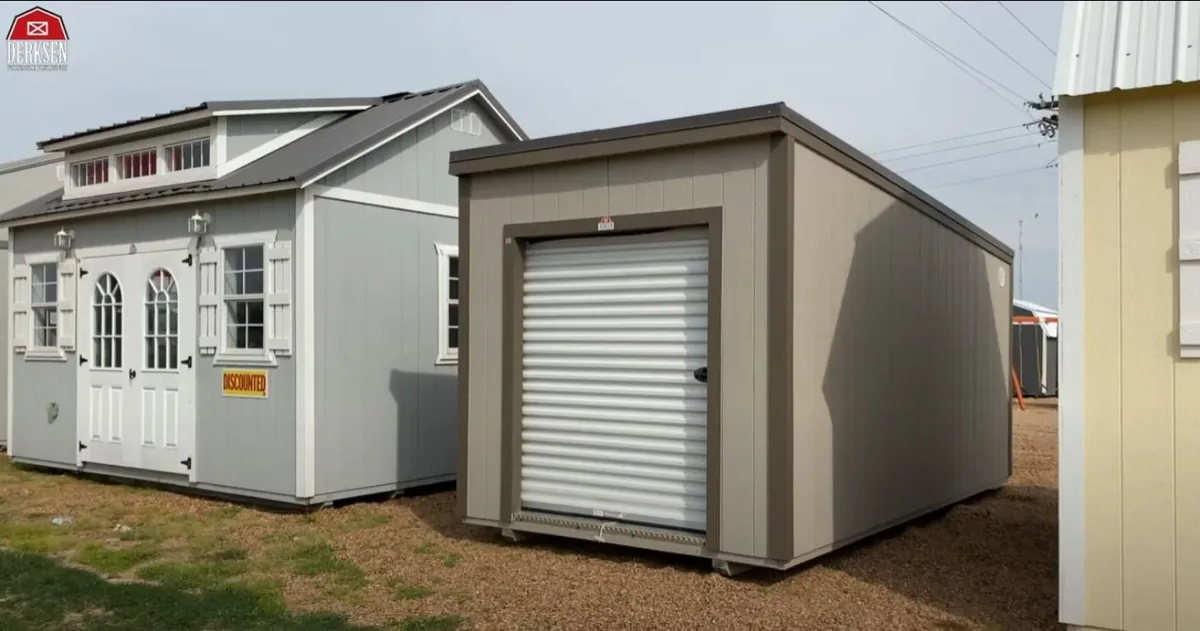
Portable Building Delivery on Hard to Access Land Texas
Portable building delivery on hard-to-access land in Texas is absolutely possible, even on tight, sloped, wooded, or rural property, as long as the site is properly measured ahead of time and the right delivery method is matched to the terrain. At Gotcha Covered in Tyler, Texas, we handle deliveries across East Texas — including the back acres and tricky lots around Lake Palestine — by planning the route and access point before the building ever leaves the lot. The key is knowing your obstacles up front: gate widths, overhead limbs, soft ground, and turning space. When the planning is done right, "no access" usually turns into "here's how we get it there."
1. Why Hard-to-Access Land Scares Off Most Delivery Crews
A lot of property owners around East Texas have already been told no before they ever call us. The land is too steep, the driveway's too narrow, there's a creek, a stand of pines, a cattle gate that won't open wide enough — and the first company they called just didn't want the headache. That's understandable, but it's not the same thing as impossible.
Most crews turn down tough land because they only know one way to deliver, and if that one way doesn't fit, they walk. Here in Smith County and out toward Bullard, Whitehouse, and Flint, a lot of the best homesites are the hardest to reach. That's part of what makes rural property worth having.
- Narrow or gated driveways that won't clear a standard delivery trailer
- Soft, low, or recently rained-on ground where a truck would sink
- Slopes and uneven terrain that make leveling a real challenge
- Overhead power lines or low tree limbs along the only route in
Pro Tip: Before you assume a building won't fit, measure your tightest pinch point — gate, bridge, or tree gap — in actual feet and have that number ready when you call. Half the "impossible" deliveries are solved with one measurement.
2. How Portable Buildings Actually Get to Tough Sites
Portable buildings get delivered to hard-to-reach land using specialized equipment that doesn't rely on a full-size truck backing all the way in. A mule — a remote-controlled machine that lifts and carries the building across ground a truck can't touch — can thread a building through a gate, down a slope, and into a spot a standard trailer could never reach.
That changes the whole conversation. The delivery truck can stage out by the road, and the building itself gets walked back to the pad. We've placed buildings in backyards, between trees, and on lots where the only level spot was a good distance from any drivable surface.
- A mule or similar equipment to move the building the last stretch off-road
- Staging the truck at the nearest firm, level spot and carrying from there
- Temporary ground protection so soft dirt doesn't swallow the equipment
- Blocking and leveling once the building reaches the pad
Pro Tip: If your property has one firm, level area the truck can reach — even a gravel turnaround near the gate — mention it when you call. A good staging spot often makes a "hard" delivery routine.
3. Plan the Delivery Before You Buy the Building
The single biggest mistake with portable building delivery on hard-to-access land in Texas is buying the building first and figuring out the access later. Planning first prevents nearly every delivery headache there is, and it's cheaper to solve a problem on paper than with a stuck truck. For a quick primer on what "firm, level, well-drained ground" actually means, the Texas A&M AgriLife Extension site at agrilifeextension.tamu.edu has solid, plain guidance on soil and drainage across Texas.
Good planning means walking the route the building will travel, not just looking at where it'll end up. Where does the truck stage? What's the tightest point along the path? Does the ground stay firm after a rain, or does it turn to soup? Is the pad spot actually level, or does it just look level from the porch?
- Confirm the final pad location drains well and sits reasonably level
- Walk the full access route and note every pinch point and soft spot
- Check overhead clearance for limbs and lines along the whole path
- Decide on the delivery method before the order, not after
Pro Tip: Flag the exact pad spot with stakes or spray paint before delivery day. It removes the guesswork and keeps the building from landing a few feet off from where you pictured it.
4. Site Prep That Makes a Hard Delivery Easy
A little site prep ahead of time turns a difficult delivery into a smooth one. On hard-to-access East Texas land, the ground is usually the deciding factor — soft, sloped, or uneven dirt is what traps equipment and throws off leveling. Firming up the path and the pad before we come out is the best money you can spend.
You don't have to pour a slab for most portable buildings. Often a well-drained, leveled dirt or gravel pad is plenty. What matters is that the spot is stable and the water runs away from the building, not toward it. On slopes, that may mean a little grading or some extra blocking to get the floor true.
- Clear limbs and brush back along the access route and around the pad
- Add gravel to soft or low spots the equipment has to cross
- Level and grade the pad area, or plan for blocking on a slope
- Keep the pad a little higher than the surrounding ground for drainage
Pro Tip: If your access road gets greasy after rain, schedule delivery for a dry stretch. Waiting three dry days beats paying to pull equipment out of the mud.
5. When Nobody Else Will Take the Job
Some jobs get turned down flat, and those are often the ones that matter most to the person who owns the property. If three companies have already told you your land's too tough, that doesn't mean you're out of options — it usually means you need someone who leads with problem-solving instead of convenience.
There was an oil tote problem a while back that nobody in the area would touch. It took a 500-mile drive to get it solved, because the alternative was leaving somebody stuck with a problem that wasn't their fault. That wasn't about profit. It was about taking on the job everyone else walked away from.
- Hard access doesn't automatically mean no — it means plan harder
- The right equipment and a willing crew solve most "impossible" sites
- Getting a straight answer should never cost you anything
- Walking the property in person beats guessing from a phone call
Pro Tip: Ask any company you call whether they'll come look at the site before they say yes or no. A crew that'll put eyes on your land is a crew that's actually trying to solve it.
What I've learned about tough deliveries after years in the field
The property owners who call about hard-to-reach land are usually a little worn down by the time they reach us. They've heard no a few times, and they're half expecting to hear it again. The thing is, most of those "no's" weren't really about the land — they were about a crew that only had one way of doing things.
Doing things the right way means planning better than anyone else before a building ever moves. Walk the route, measure the gates, check the ground, find the staging spot. When the plan is solid, the delivery is almost boring — and boring is exactly what you want on delivery day. The drama comes from skipping the planning, not from the terrain.
The other half is being willing to own the outcome. If it's a mistake, I eat it. That's held true whether it was rebuilding a greenhouse by hand at a loss or driving 500 miles to fix an oil tote nobody else would take. You stand behind the work long after the project is done, or you don't really stand behind it at all. You can read more about how we think and work at Gotcha Covered.
What makes the approach here different is simple: the goal isn't to close you, it's to solve your actual problem. If your land truly can't take a building, you'll hear that honestly. But most of the time, with the right plan and the right equipment, we find a way to get it there.
How Gotcha Covered helps East Texas property owners with hard-to-access delivery
Gotcha Covered serves homeowners and property owners across Tyler and East Texas — Smith County, Bullard, Whitehouse, Lindale, Flint, and the Lake Palestine area — with portable buildings, metal buildings, playsets, and outdoor living, including the rural and hard-to-reach sites a lot of companies pass on. We don't treat tough land as a reason to say no. We treat it as the first thing to plan around.
That starts with an honest look at your property and your goals. We'll talk through the access route, the pad location, the ground conditions, and which delivery method fits your site — before you ever commit to buying a building. If something about the land is going to be a real problem, you'll know up front, in plain terms, so you can make the right decision the first time.
If you've got land others have called too tough, let's walk it together and figure out what's actually possible. Call (903) 504-7858 or reach out through Gotcha Covered for clear, honest guidance before you build. We're based at 10556 US Hwy. 69 N in Tyler, and we're glad to come take a look.
FAQ
Is portable building delivery on hard to access land Texas even possible?
Portable building delivery on hard-to-access land in Texas is possible on most properties, as long as the access route and pad are measured and matched to the right delivery method ahead of time. At Gotcha Covered in Tyler, we use equipment like a mule to move buildings across ground a standard truck can't reach, which opens up sloped, wooded, and gated lots that other crews turn down.
What equipment is used to deliver a portable building to a tight or rural spot?
A mule — a remote-controlled machine that lifts and carries the building off-road — is the main tool for getting a portable building into tight or rural spots. It lets the delivery truck stage near the road while the building is walked back through gates, down slopes, and between trees to the final pad.
Do I need a concrete slab for a portable building on uneven land?
Most portable buildings do not require a concrete slab; a firm, level, well-drained dirt or gravel pad is usually enough. On uneven or sloped land around East Texas, the building is leveled with blocking, and the main priority is making sure water drains away from it rather than toward it.
What should I do to prepare my property before delivery day?
Before delivery day, clear brush and limbs along the access route, firm up any soft spots with gravel, and level or grade the pad area so the building sits true. Gotcha Covered in Tyler, Texas recommends staking the exact pad location and scheduling around dry weather if your access road gets soft after rain.
What if other companies already told me my land is too hard to deliver to?
If other companies have told you your land is too hard, it's worth a second opinion, because "too hard" often just means they only had one way of delivering. At Gotcha Covered we take on the jobs others pass on and will come look at your East Texas property in person before saying yes or no, so you get a straight answer either way.
