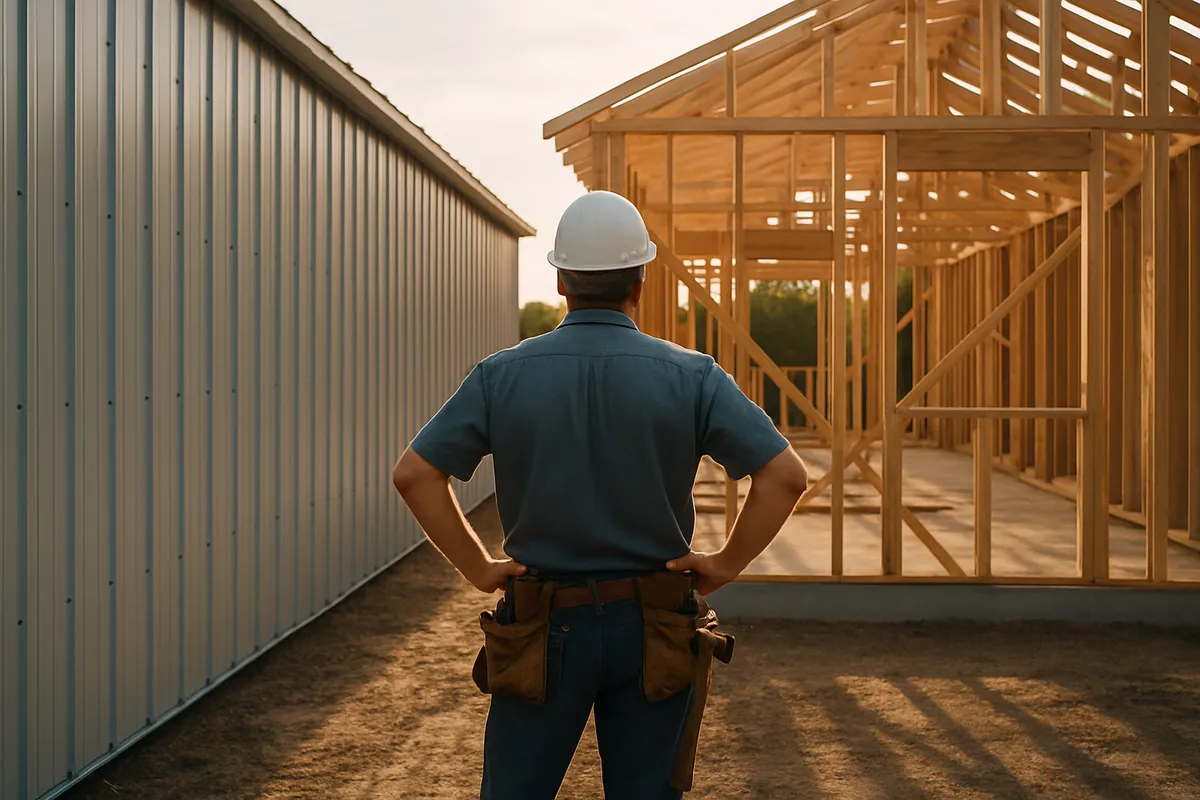
Metal Building vs Wood: Why the Cheapest Bid Costs You More
The cheapest building bid on the table is almost never the cheapest building once the dust settles. That's the truth most folks don't hear until they've already signed. Here at Gotcha Covered in Tyler, Texas, the whole goal has always been to tell people what they actually need to hear before they build — and when it comes to metal versus wood, the low number on paper usually hides the real cost. This is the kind of conversation that can save you time, money, and a lot of frustration.
1. Is It Cheaper to Buy a Metal Building or Build One Out of Wood?
Here's the short answer most people are searching for: up front, a wood-framed building often looks cheaper on the bid. Over the life of the building, a metal building is usually the cheaper choice. The gap comes down to what happens after the build — maintenance, repairs, and how long the thing actually lasts.
Wood needs paint, seal, and attention. It rots, it warps, and East Texas humidity and termites don't do it any favors. A steel building shrugs most of that off. When you spread the cost across 20 or 30 years instead of just looking at day one, the math flips. According to This Old House, long-term maintenance is where a lot of "cheap" projects quietly drain your wallet.
- Wood building: lower upfront price, higher lifetime cost (paint, rot, termites, repairs)
- Metal building: higher upfront price, lower lifetime cost (little maintenance, long lifespan)
- The tie-breaker: how long you plan to keep and use the building
Pro Tip: Ask every bidder to write down the expected maintenance schedule and cost for the first ten years. The cheap bid usually goes quiet real fast.
2. Why the Cheapest Building Bid Almost Always Costs You More
A low bid doesn't mean a builder found magic savings. It usually means something got left out. Cheaper lumber grade. Thinner metal gauge. No proper site prep. Anchors that meet the minimum and not much else. The price looks great because the plan is thin.
The problem shows up later, and it always costs more to fix than to do right the first time. That's why the focus around here is planning-first. When the plan is solid and honest on the front end, you avoid the change orders, the callbacks, and the "well, that wasn't included" surprises. The goal is simple: make the right decision the first time.
- A cheap bid often skips proper site leveling and drainage
- Thinner metal gauge saves money now, dents and fails sooner later
- Missing details become "extras" that erase your savings
Pro Tip: Compare bids line by line, not bottom line to bottom line. Two prices that look far apart are often measuring completely different buildings.
3. The Real Cost of Wood: Maintenance, Rot, and East Texas Weather
Wood is a beautiful material and it has its place. But out here in East Texas, wood works against you if you don't stay on top of it. Our humidity, our rain, and our termites are relentless. A wood building that isn't maintained can start showing serious trouble inside a decade.
Every few years you're looking at repainting or resealing. If moisture gets in, you get rot. If termites find it, you get structural problems. None of that is on the original bid — but all of it is real money coming out of your pocket down the road. The EPA has plenty of guidance on why moisture control matters so much for wood structures, and in our climate it matters a lot.
- Repainting and resealing every 3–5 years
- Rot risk anywhere water sits or wicks in
- Termite treatment and repair costs over time
Pro Tip: If you go wood, budget for maintenance from day one. A building you can't afford to maintain isn't a bargain — it's a slow bill.
4. Where Metal Buildings Save You Money Over Time
Metal earns its keep the longer you own it. A well-built steel building doesn't rot, doesn't feed termites, and doesn't need painting every few years. That's fewer bills, fewer weekends spent on upkeep, and a building that still looks right 20 years in.
Metal also tends to go up faster, which can mean lower labor cost, and many steel buildings qualify for better insurance rates because they hold up to fire and weather. That's not a sales pitch — it's just how the numbers work when you stretch them across the real life of the building. For families and property owners across Smith County, Bullard, Whitehouse, and out toward Lake Palestine, that long-term savings adds up.
- No painting, no rot, no termites to fight
- Faster assembly can lower labor costs
- Longer lifespan with far less maintenance
Pro Tip: Don't just ask the price of the metal — ask the gauge. A thicker gauge costs a little more and lasts a whole lot longer.
5. When Wood Actually Makes Sense (And When It Doesn't)
None of this means metal wins every single time. Wood still makes sense in the right situation. If you're building something small, temporary, or where a certain look really matters, wood can be the honest right answer. A portable wood building can be a smart, affordable choice for a family that needs storage now without a big commitment.
The wrong move is choosing wood just because the first-day price is lower, then getting blindsided by the upkeep. That's the mistake the cheapest bid sets you up for. The right move is matching the material to how you'll actually use the building and how long you plan to keep it — which is exactly the kind of thing that ought to get talked through before anybody signs anything.
- Wood: good for small, short-term, or look-specific builds
- Metal: better for long-term use, bigger spans, low maintenance
- The deciding factor is your real plan, not just the sticker price
Pro Tip: Tell your builder how long you plan to keep the building and how you'll use it. If they don't ask, that tells you something too.
What I've learned about cheap building bids after years in the field
The lowest bid wins a lot of jobs. It just doesn't win a lot of happy customers. Time and again, the folks who chased the cheapest number came back frustrated, out more money than if they'd done it right the first time. And that's the whole reason Gotcha Covered exists — to plan better and tell people the truth, even when the truth costs a sale.
There's a saying that gets lived around here: if it's a mistake, I eat it. There was a greenhouse job where a mistake got made, and instead of arguing over it, the whole thing got rebuilt by hand at a loss. That customer became a customer for life. That's what standing behind the work looks like long after the project is done — and it's a big part of why the price question can't be the only question. You can read more about how we approach that on our site.
What makes the approach here different is that the sale genuinely isn't the point. I don't care if this closes or not — what matters is that you walk away able to make the right decision the first time. Sometimes that means talking somebody out of the more expensive building because it's more than they need. Sometimes it means being honest that the cheap wood shed is going to cost them later. Either way, the goal is the same: work done as if it's for someone you love deeply.
How Gotcha Covered helps East Texas families choose between metal and wood
At Gotcha Covered in Tyler, Texas, we work with homeowners, families, and property owners across East Texas on portable buildings, metal buildings, playsets, and outdoor living. We start with a real conversation about your budget, your property, and how long you plan to keep the building — then we lay out the honest trade-offs between metal and wood so the number on the page actually reflects the building you'll own.
We serve Tyler and the surrounding area, including Smith County, Bullard, Whitehouse, Lindale, Flint, and out around Lake Palestine, including rural properties that need real site planning. Whether it's a simple storage building or a full outdoor living setup, the focus stays on doing things the right way and standing behind the work.
If you're planning a project and want to make the right decision the first time, reach out. Call (903) 504-7858 or visit Gotcha Covered for clear, honest guidance before you build. You can also find us at 10556 US Hwy. 69 N, Tyler, Texas, 75706.
FAQ
Is it cheaper to buy a metal building or build one out of wood?
Wood is usually cheaper up front, but a metal building is typically cheaper over its full life because it needs far less maintenance and lasts longer. The right answer depends on how long you plan to keep the building and how you'll use it.
How long does a metal building last compared to a wood one?
A well-built metal building can easily last 30 years or more with minimal upkeep, while an unmaintained wood building in East Texas can start showing rot or termite damage inside a decade. Maintenance is what makes the biggest difference in either case.
Why is one building bid so much cheaper than the others?
Usually because something got left out — thinner metal gauge, cheaper lumber, or no proper site prep. Compare bids line by line instead of bottom line to bottom line so you're actually comparing the same building.
Do metal buildings hold up in East Texas weather?
Yes. Steel doesn't rot or feed termites, and a proper gauge holds up well to our humidity and storms. Just make sure the site is prepped right and the anchoring is done properly, not just to the bare minimum.
Can I get a portable wood building instead of a permanent metal one?
Absolutely, and for a small or short-term need it can be a smart, affordable choice. The key is choosing wood because it fits your plan — not just because the first-day price looks lower.
