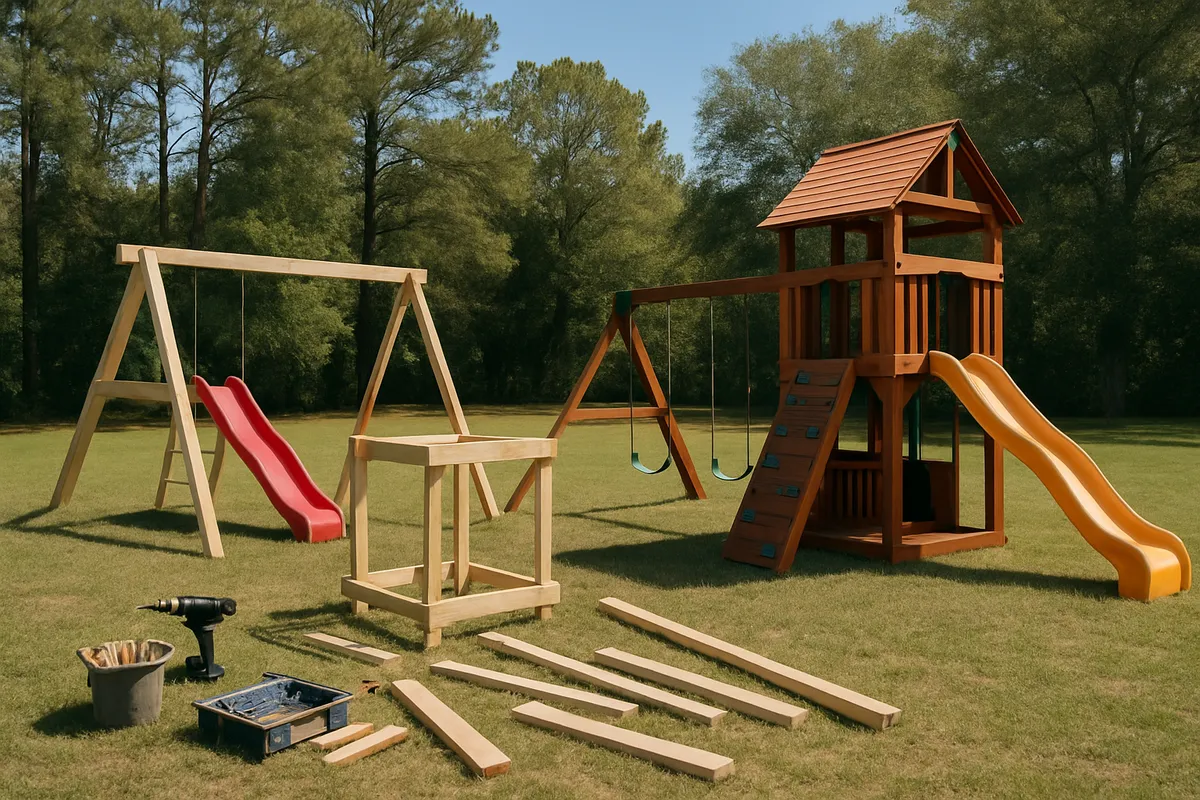
Is It Cheaper to Build a Playset or Buy One? East Texas Guide
Most folks in East Texas think their backyard is just a patch of grass to mow — but it can be a whole lot more. Here at Gotcha Covered Metal and Portable Buildings in Tyler, Texas, we see the same thing every week: families staring at an empty yard, wondering where to start and who to trust. And the number one question we hear about kids' spaces is a simple one — is it cheaper to build a playset yourself or buy one already done? Let's answer that straight, no sales pressure, and then talk about everything else your yard could become.
1. Is It Cheaper to Build a Playset or Buy One? The Honest Answer
Here's the truth most people don't hear until it's too late: building a playset from scratch can be cheaper on paper, but rarely by as much as folks expect. A basic DIY playset from raw lumber, hardware, slides, and swings usually runs somewhere between $500 and $1,500 in materials — if nothing goes wrong. A pre-built or professionally installed playset often lands between $1,500 and $6,000 depending on size and features. On the surface, DIY wins.
But that gap closes fast once you count your weekends, your tools, wasted lumber from cut mistakes, and the cost of doing it twice when the first attempt wobbles. According to HomeAdvisor's playset cost data, the real spread comes down to materials quality and whether your labor is free. If your Saturdays are worth something to you, the math shifts.
- DIY materials: roughly $500–$1,500, plus your time and tools
- Pre-built kit: roughly $1,000–$3,000, some assembly required
- Professionally installed: roughly $1,500–$6,000, done right the first time
Pro Tip: Before you buy a single board, price out the total DIY cost — including a safe landing surface like mulch or rubber tiles — and compare it against an installed price. The gap is usually smaller than you'd guess.
2. What DIY Really Costs a Family in East Texas
The lumber price is only part of the story. When you build a playset yourself in the East Texas heat, you're taking on the pressure-treated wood, the galvanized hardware, the ground anchoring, and the safety layout — all of it. Miss a bolt spec or set a post shallow, and you've got a wobble that only shows up after your kids are already climbing on it.
Then there's the surface underneath. A lot of people forget that a big part of playset safety is what happens when a kid falls. Grass compacts hard, and that's where injuries come from. Doing it right means budgeting for engineered wood fiber or rubber mulch, which adds real dollars folks didn't plan for.
- Pressure-treated lumber warps in our humidity if it's not the right grade
- Hardware and anchoring are where corners get cut — and where kids get hurt
- Fall surfacing is a hidden cost most DIY plans skip entirely
Pro Tip: If you go DIY, don't cheap out on the anchoring or the surface. That's not where you save money — that's where you protect your kids.
3. When Buying a Playset Actually Makes More Sense
For a lot of families around Tyler, buying beats building — and not just for convenience. A professionally built or installed playset comes with a design that's already been thought through, materials that hold up in our climate, and often a warranty behind it. That means somebody stands behind the work long after the project is done, instead of you standing in the yard alone wondering why the slide won't sit level.
Buying also gets you time back. That's the thing nobody puts a dollar figure on. A weekend spent watching your kids play is worth more than a weekend spent fighting with a drill and a set of instructions in the sun.
- No wasted weekends, no trips back to the store for the wrong part
- Materials built to handle East Texas heat and storms
- A real warranty and someone accountable if something goes wrong
Pro Tip: Ask any playset installer one question: "What happens if something breaks in two years?" The answer tells you everything about whether they'll stand behind it.
4. Beyond the Playset: What Your Backyard Could Actually Become
A playset is just the start of the conversation. Once families around Bullard, Whitehouse, and Lindale start thinking bigger, they realize the same empty yard can hold a whole lot more life. A portable building becomes a workshop, a she-shed, or a home office. A covered patio turns into the spot where everybody actually gathers. A cabin setup gives grandparents a place to stay or a teenager some space of their own.
The families who end up happiest are the ones who planned the whole yard first, then built in stages. When you know where the playset, the storage building, and the future patio are all going, you don't waste money moving things later or discovering the shed is sitting right where the patio should've gone.
- Portable buildings for storage, workshops, or a quiet home office
- Metal buildings for serious storage, RVs, or equipment
- Outdoor living spaces and playsets that grow with your family
Pro Tip: Map your whole backyard on paper before you build one thing. Good planning up front prevents the costly mistakes that show up after everything's already in the ground.
5. How to Make the Right Decision the First Time
The build-versus-buy question isn't really about a playset. It's about how you want to spend your money and your weekends, and how much you value peace of mind. Some families genuinely enjoy the build, have the tools, and want the project. For them, DIY is the right call. Others just want a safe, solid space their kids can use this summer — and for them, buying done-right is worth every dollar.
The mistake is deciding based on price alone. A cheap playset that fails in two years costs more than a solid one that lasts ten. The Consumer Product Safety Commission's public playground safety guidelines are a good place to start no matter which route you pick — because safety is the one line item you never trim.
- Decide based on total cost and safety, not just the sticker price
- Factor in your time, tools, and honest DIY skill level
- Plan the whole yard before committing to any single piece
Pro Tip: If you're not sure, get an honest opinion from someone who'll tell you the truth even if it means they don't get the sale. That conversation alone can save you time, money, and a lot of frustration.
What I've learned about backyard playsets after years in the field
After years of doing this in East Texas, here's what stands out: the families who regret their playset almost always regret rushing the decision. They chased the cheapest option, skipped the planning, and ended up spending more to fix it than they would've spent doing it right the first time.
That's why the approach here has always been planning-first. Before anybody talks price, the real question is what your family actually needs and where everything ought to go. Sometimes that conversation ends with, "Honestly, you could build this yourself and save some money." And that's fine — the goal isn't to close a sale, it's to help you make the right decision the first time. There have been plenty of times when it made more sense to point somebody toward the DIY route, and that's the honest answer they got.
The other thing worth saying: when something does go wrong on a job here, it gets made right. If it's a mistake, I eat it. That's not a slogan — that's how a greenhouse job once got rebuilt by hand at a loss, because that's what doing things the right way looks like when nobody's watching. You can read more about how we think about this work over at Gotcha Covered.
Work should be done as if it's for someone you love deeply. When your kids are the ones climbing on it, that standard isn't optional.
How Gotcha Covered helps East Texas families with backyard playsets and outdoor living
Gotcha Covered Metal and Portable Buildings serves families all across East Texas — Tyler, Bullard, Whitehouse, Lindale, Flint, and the Lake Palestine area — with playsets, portable buildings, metal buildings, and outdoor living spaces. Whether you're leaning toward building your own playset or want one installed right, the first step is always the same: a straight, no-pressure conversation about what your yard could actually become.
We'll walk your space, talk through the whole plan, and give you clear numbers — including an honest take on whether building or buying makes more sense for your family and budget. No corners cut, no price-only pressure, just guidance you can trust from folks who stand behind the work long after the project is done.
If you're planning a backyard project and want to make the right decision the first time, we're here to help. Call (903) 504-7858 or visit Gotcha Covered to get clear, honest guidance before you build. You can also find us at 10556 US Hwy. 69 N, Tyler, Texas.
FAQ
Is it cheaper to build a playset or buy one?
Building a playset yourself is usually cheaper on materials alone — roughly $500 to $1,500 versus $1,500 to $6,000 for a professionally installed one. But once you count your time, tools, wasted lumber, and safe fall surfacing, the gap gets a lot smaller than most families expect.
How much does a backyard playset cost in East Texas?
A DIY playset in the Tyler area typically runs $500 to $1,500 in materials, while pre-built and installed options range from about $1,500 to $6,000 depending on size and features. Climate-grade lumber and proper anchoring matter more here because of our heat and humidity.
What's the hidden cost people forget when building a playset?
The two big ones are safe fall surfacing — like engineered wood fiber or rubber mulch — and proper ground anchoring. Both add real dollars and both are where cutting corners actually puts kids at risk, so they're never the place to save money.
Should I build my own playset or hire someone in Tyler, Texas?
It depends on your tools, your skill level, and how you value your weekends. If you enjoy the project and can do it safely, DIY is a fine choice — but if you want it done right the first time with a warranty behind it, having it installed is often worth the cost.
What else can I add to my East Texas backyard besides a playset?
Plenty — portable buildings for storage or a home office, metal buildings for equipment, and covered outdoor living spaces where the whole family gathers. The smartest move is planning the entire yard first so everything fits together without costly do-overs.
