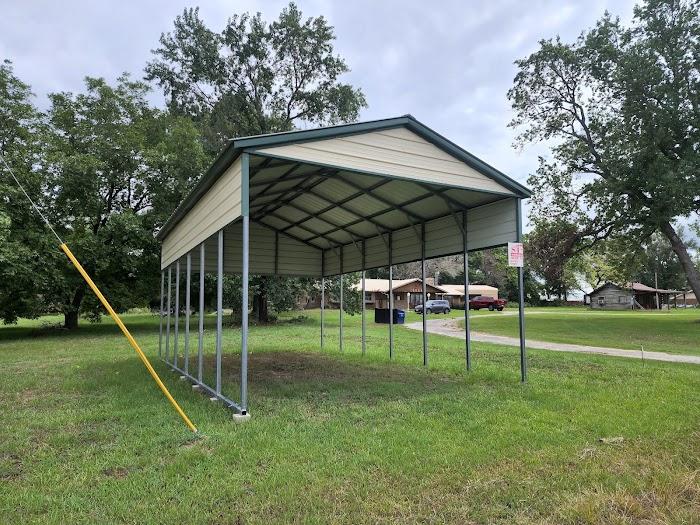
How to Plan a Metal Building on My Property in Texas
To plan a metal building on your property in Texas, start by nailing down exactly how you'll use the building, measure and mark the site with setbacks and drainage in mind, check your local permit and county requirements, then design the foundation and layout around that use before you ever order steel. Getting those pieces right up front is the whole game, and it's where most folks here in Tyler and across East Texas end up wishing they'd slowed down. At Gotcha Covered, planning first is how we keep a build from turning into a pile of regret and wasted money. This is the kind of conversation that can save you time, money, and a lot of frustration.
1. Start With How You'll Actually Use the Building
Before anything else, get crystal clear on what this building is for. A workshop, an equipment barn, a she-shed, covered RV parking, and a home gym all want different things from the same slab of steel. Width, ceiling height, door placement, electrical, and whether you need climate control all trace straight back to use. Skip this step and you'll build something that looks fine and works poorly.
The honest truth is most people start with a size instead of a purpose. They say "I want a 30x40," and then six months after move-in they can't fit the tractor through the door or there's no room to walk around the truck. Purpose first, dimensions second. That one shift saves more money than any discount ever will.
- Write down every single thing you plan to store, park, or do inside the building.
- Add room to walk around your biggest item, not just park it.
- Think five years out, not just today — needs grow.
Pro Tip: Measure your tallest and widest vehicle or piece of equipment, then add working clearance on every side before you settle on door height and bay width.
2. Pick the Right Spot on Your Property
Where the building sits matters as much as how it's built. On rural East Texas land, you've got slope, trees, soil, drainage, and access to think about, and the flattest-looking corner isn't always the smartest one. You want solid ground, water that drains away from the structure, and an approach your truck or trailer can actually reach year-round when the clay turns to soup after a hard rain.
Also look at where your utilities are. Running power or water a long way across a property adds real cost fast. And think about the sun, prevailing wind, and how the building will look from the house. A little time standing out there with marking flags beats finding out after the slab is poured that you put it in the one spot that floods.
- Walk the site after a heavy rain to see where water actually goes.
- Keep clear access for the delivery and build crew.
- Don't crowd the building against trees whose roots and limbs will cause trouble later.
Pro Tip: Stake out the full footprint with string and flags and leave it up for a week — live with it before you commit.
3. Know Your Setbacks, Permits, and County Rules
In Texas, permit and setback requirements depend entirely on where your property sits, so this is not a step to guess at. Inside Tyler city limits you'll likely deal with permits and zoning; out in unincorporated Smith County or around Flint and Lake Palestine, the rules can look very different. Some areas want little; others have deed restrictions, HOA rules, or floodplain concerns that change everything.
Figure this out before you design, not after. Setbacks tell you how far the building has to sit from your property lines, and a floodplain designation can affect how and whether you build at all. The time to learn you're in a flood zone is on paper, not when an inspector shows up. You can start with the official City of Tyler site and your county offices to understand what applies to your specific lot.
- Confirm setback distances from every property line.
- Check for deed restrictions, HOA rules, and easements.
- Ask about floodplain status before finalizing the location.
Pro Tip: Call your permitting office early with your rough plan — a five-minute phone call can keep you from designing something you're not allowed to build.
4. Plan the Foundation and Site Prep Right
The foundation is where a metal building succeeds or fails, and in East Texas our expansive clay soil makes this even more important. A building is only as good as what it sits on. You'll generally be choosing between a concrete slab, a pier foundation, or setting on prepared ground, and the right call depends on your soil, your use, and your budget. A workshop with heavy equipment and a storage shed don't need the same thing.
Site prep is the part nobody sees and everybody underestimates. The pad needs to be level, compacted, and graded so water runs away from the structure. Cutting corners here shows up later as cracks, pooling water, doors that won't close, and a building that slowly fights the ground it sits on. Spend your planning energy here — it's cheaper than fixing it after.
- Match the foundation type to how heavy the building's use will be.
- Grade the pad so water drains away on all sides.
- Compact fill properly; settling later is expensive to fix.
Pro Tip: Build the pad a little higher than the surrounding ground so rainwater always has somewhere lower to go.
5. Set a Real Budget and Line Up the Right Builder
A real budget covers more than the steel. Site prep, foundation, permits, utilities, doors, insulation, and delivery all add up, and leaving them out is how people blow past what they planned. Price everything as a whole so there are no ugly surprises halfway through. The cheapest number on paper is almost never the cheapest building once it's standing.
When you pick who builds it, look past the quote. You want someone who'll tell you the truth even when it costs them the sale, who plans the whole thing with you up front, and who stands behind the work long after the project is done. Ask how they handle it when something goes wrong, because something eventually does. The answer to that question tells you more than any brochure.
- Budget the full build, not just the building kit.
- Get everything in writing before work starts.
- Judge a builder by how they own problems, not just how they sell.
Pro Tip: Ask any builder point-blank: "What happens if a mistake gets made?" How they answer tells you who you're really dealing with.
What I've learned about planning a metal building after years in the field
The biggest lesson out here is that the problems people pay for are almost always the ones nobody planned for. There's a reason the motto is make the right decision the first time — because the second time is slower, costlier, and a whole lot more frustrating. Most of the chaos on a build traces back to something simple that got skipped at the start: a drainage issue, a door too small, a pad in the wrong spot, a permit nobody checked.
Planning first isn't glamorous, and it won't make anyone's brochure. But it's the honest work that protects your money. When somebody comes in wanting the cheapest fast answer, the right thing to do is slow the whole thing down and ask the questions that save them from a mistake. I don't care if this closes or not — if walking you through the plan means you build something you actually love, that's the win.
And when something does go wrong on our end, there's no arguing about it. If it's a mistake, I eat it. That's what doing things the right way means when nobody's watching, and it's why so much of our work comes from people who've been with us for years. You can see how we think about every build over at Gotcha Covered.
What makes the approach different is simple: the goal is to solve the problem in front of you, not to sell you steel. Work should be done as if it's for someone you love deeply. Build on that and the trust takes care of itself.
How Gotcha Covered helps East Texas homeowners plan a metal building
If you're staring at too many options and scared of making an expensive mistake, that's exactly the spot where we do our best work. Gotcha Covered Metal and Portable Buildings, right here at 10556 US Hwy. 69 N in Tyler, Texas, walks property owners through the whole plan before a dime gets spent — use, site, setbacks, foundation, and budget — so you build with confidence instead of crossing your fingers.
We serve Tyler, Smith County, Bullard, Whitehouse, Lindale, Flint, and the Lake Palestine area with metal buildings, portable buildings, playsets, and outdoor living done the honest way. The conversation is low-pressure on purpose. You'll hear what you actually need to hear, including when the answer is "wait" or "that spot won't work."
If you're planning a build and want to make the right decision the first time, we're here to help. Reach out through Gotcha Covered or give us a call at (903) 504-7858 for clear, honest guidance before you build.
FAQ
How do I plan a metal building on my property in Texas?
To plan a metal building on your property in Texas, first define exactly how you'll use it, then pick and mark the right site with setbacks and drainage in mind, confirm your local permit and county rules, and design the foundation to match your use before ordering any steel. At Gotcha Covered in Tyler, Texas, we walk homeowners through each of those steps up front because getting them right prevents the costly mistakes that show up after the slab is poured.
Do I need a permit for a metal building in Texas?
Whether you need a permit for a metal building in Texas depends on where your property is located, so you have to check your specific city and county rules before you build. Inside Tyler city limits you'll likely need permits and have to meet zoning, while unincorporated parts of Smith County may have different requirements along with possible deed restrictions or floodplain rules.
What kind of foundation does a metal building need in East Texas?
A metal building in East Texas needs a foundation matched to its use and to our expansive clay soil, which usually means a properly graded and compacted concrete slab or pier foundation. At Gotcha Covered in Tyler, Texas, we help you choose based on what the building will hold and how water moves across your land, because the pad is where most long-term problems start.
How much does it cost to put a metal building on my land?
The cost to put a metal building on your land in Texas depends on size, foundation, site prep, utilities, permits, and finishes, so there's no single honest number that fits every property. The smart move is to budget the entire build as a whole rather than just the steel, and to get clear pricing in writing up front so there are no surprises mid-project.
How far from the property line can I build a metal building in Texas?
How far a metal building must sit from your property line in Texas is set by local setback rules, which vary by city, county, and any HOA or deed restrictions on your lot. Confirm those distances with your permitting office before you finalize the building's location, because moving a building after it's placed is far more expensive than planning the spot correctly the first time.
