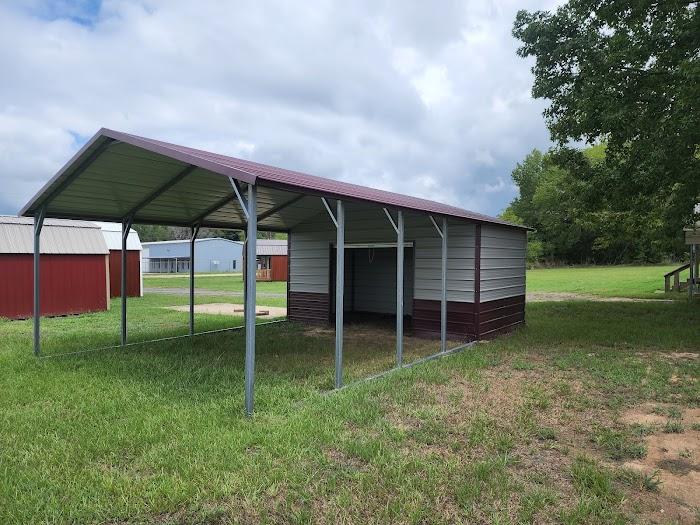
How Close Can You Build to the Property Line in Texas?
In Texas, how close you can build to the property line depends on local setback rules, which are usually set by your city or county and often require anywhere from a few feet to 25 feet or more of clearance depending on the structure and zoning — and on rural land, easements and utility rights-of-way can matter even more than the line itself. There isn't one statewide number, so the honest answer is that it depends on where your property sits and what you're building. Here at Gotcha Covered in Tyler, Texas, a lot of the folks we talk to have tricky or rural land where the "standard" answers don't fit. This is the kind of conversation that can save you time, money, and a lot of frustration before you ever break ground.
1. Texas Property Line Setbacks: Why There's No Single Answer
The first thing to understand is that Texas doesn't hand down one setback number for the whole state. Setbacks — the required distance between a structure and your property line — get decided at the local level. Inside city limits like Tyler, Whitehouse, or Lindale, you'll usually deal with zoning ordinances. Out on rural land near Flint or the Lake Palestine area, the rules can look very different, and sometimes there's more freedom than people expect.
That's exactly where a lot of property owners get stuck. You call around, and one company gives you a number that fits a subdivision, another gives you a number that fits open acreage, and neither one actually looked at your land. The Texas Municipal League is a good place to understand how much authority local governments have over building rules, because it varies from one jurisdiction to the next.
- City lots often carry front, side, and rear setback requirements written into zoning code
- Rural county land may have fewer setback restrictions but more easement concerns
- Structure type matters — a portable building, a metal building, and a covered patio can each be treated differently
Pro Tip: Before you assume you can't build where you want, get your actual parcel checked against your local rules. What sounds impossible on the phone often turns out to be very doable on the ground.
2. Easements and Utility Rights-of-Way on Rural East Texas Land
If your property sits out toward Lake Palestine or on acreage in Smith County, easements will often matter more than the property line itself. An easement is a strip of land where someone else — a utility company, the county, a neighbor — has a legal right to access or run lines. You can own the land, but you can't block that access, and building on top of it can force you to tear the structure back down.
This trips up a lot of good people. You measure carefully off your property line, you plan everything right, and then a buried utility easement runs straight through your build site. On rural land those easements aren't always obvious, and they're not always where folks assume. Your property survey and your deed are where the truth lives — the Texas General Land Office offers helpful background on land records and boundaries.
- Utility easements can restrict building even when setbacks allow it
- Access easements protect a neighbor's or the county's right to cross your land
- Your recorded survey and deed spell out what's really there
Pro Tip: Pull your survey before you plan placement, not after. Moving a build a few feet on paper costs nothing — moving it after it's set costs plenty.
3. How Setbacks Differ for Portable Buildings, Metal Buildings, and Playsets
Not every structure is treated the same way, and that's good news if you've been told "no" already. A portable building often falls under different rules than a permanent metal building on a poured slab, and things like playsets or covered outdoor living spaces can have their own considerations. On tricky lots, that difference sometimes opens up options a permanent build wouldn't.
Here's what usually happens: someone gets turned away because a company assumed a permanent structure and ran into a setback wall. But a portable building that isn't permanently affixed may sit under a different classification. That's not a loophole — it's just knowing the difference and planning the right kind of build for your land. Placement, foundation, and permanence all factor in.
- Portable buildings may not require the same permits or setbacks as slab-built structures
- Metal buildings on permanent foundations usually face stricter setback and permit rules
- Playsets and outdoor living areas often have their own placement guidelines
Pro Tip: If a permanent build won't fit your setbacks, ask about a portable option before you give up. The right building type can turn a "can't" into a "here's how."
4. Hard-to-Access and Oddball Lots: When Other Companies Walk Away
Some of the best land in East Texas is also the hardest to build on. Steep drops toward the water around Lake Palestine, narrow access, wooded lots, wet ground, weird angles on the property line — these are the jobs a lot of companies quietly turn down because they're more trouble than a flat suburban backyard. If you've already been told no, that doesn't mean your project is impossible. It usually means nobody took the time to solve it.
Being a problem-solver first means looking at what's actually in front of you instead of forcing your land to fit a standard playbook. Access, drainage, slope, and setbacks all get worked through together. When the setback is tight, placement and structure type get adjusted. When access is rough, delivery and build methods get planned around it. The Smith County website is a starting point for local property and permitting questions, but the real answer comes from putting eyes on your specific piece of ground.
- Hard-to-access lots require planning around delivery and build method, not just setbacks
- Sloped or wooded land near the lake can be built on with the right foundation approach
- A "no" from another company usually means the problem wasn't fully worked
Pro Tip: The trickier your lot, the more planning matters up front. That's where costly mistakes get prevented — long before anyone shows up to build.
5. Permits, HOAs, and the Paperwork Nobody Warns You About
Even after you've handled setbacks and easements, there's a layer of paperwork that catches people off guard: permits and, in some neighborhoods, HOA rules. Inside city limits, certain structures need permits, and skipping that step can mean fines or being ordered to remove the build. Some subdivisions layer their own restrictions on top of city and county rules, and those can be stricter than the law.
The honest thing is to check all three — city, county, and HOA if you have one — before you commit to a location. It's not the fun part, but it's the part that keeps a good project from turning into a headache six months down the road. Doing things the right way means clearing this up front, not hoping it works out.
- City permits may be required for permanent structures inside city limits
- County rules apply to rural land and can differ from city ordinances
- HOA restrictions can be tighter than legal setbacks — check your covenants
Pro Tip: Ask about permits and HOA rules before placement, not after. Knowing the real limits early lets you make the right decision the first time.
What I've learned about property line building after years in the field
The biggest lesson is simple: most "impossible" property line problems aren't impossible — they just haven't been planned right. Folks call in feeling stuck because a company took one look at a tricky lot near Lake Palestine, or heard about a tight setback, and walked away. That's the exact work worth stepping into. Planning prevents most problems and wasted money, and that starts with actually understanding your land instead of guessing at it.
There was an oil tote problem once that took a 500-mile drive to solve, because nobody else would take it on. That wasn't about profit — it was about treating someone right when everyone else had already said no. That same mindset applies to a tough build site. If your setbacks are tight, your access is rough, or your land is shaped funny, that's not a reason to give up. It's a reason to plan harder and get creative with the right structure and placement.
What makes the approach here different is that the goal isn't to close a sale — it's to solve the actual problem in front of you. If it doesn't serve you, walking away is fine. And if a mistake ever gets made, we own it: if it's a mistake, I eat it. You can read more about how we work and what we build over at Gotcha Covered.
Build should be done as if it's for someone you love deeply. When the work is built on that, standing behind it long after the project is done isn't a slogan — it's just how it goes.
How Gotcha Covered helps East Texas property owners with tricky property line challenges
Gotcha Covered in Tyler, Texas builds portable buildings, metal buildings, playsets, and outdoor living spaces across East Texas — including the rural and hard-to-access properties other companies pass on. That means the wooded lots, the sloped land toward Lake Palestine, the tight setbacks, and the oddball requests. The work starts with planning: understanding your setbacks, easements, access, and goals before anyone talks about building anything.
If you've been told your land is too tricky, or you're just trying to figure out how close you can build before you commit, that's exactly the kind of conversation worth having. There's no pressure here and no push to close a deal — just clear, honest guidance so you can make the right decision the first time.
If you're planning a project and want straight answers before you build, reach out at Gotcha Covered or call (903) 504-7858. We're right here at 10556 US Hwy. 69 N in Tyler, Texas, serving property owners all across East Texas.
FAQ
How close can you build to the property line in Texas?
How close you can build to the property line in Texas depends on local setback rules set by your city or county, which can range from a few feet to 25 feet or more depending on the structure and zoning. There's no single statewide number, so the safe move is to check your local ordinances and your survey. At Gotcha Covered in Tyler, Texas, placement gets planned around your specific setbacks and easements before any build begins.
Are setback rules different for rural property in East Texas?
Yes, setback rules are often more relaxed on rural East Texas land than inside city limits, but easements and utility rights-of-way can restrict where you build even when setbacks allow it. Rural county rules differ from city ordinances, so your recorded survey and deed are the best source of truth. Property owners around Lake Palestine, Flint, and Smith County frequently deal with this.
Do portable buildings have to follow the same setbacks as permanent buildings?
Portable buildings often fall under different rules than permanent metal buildings on a poured foundation, and that can open up placement options on tight lots. Because they may not be permanently affixed, portable structures are sometimes classified differently for permits and setbacks. Gotcha Covered in Tyler, Texas helps property owners figure out which building type actually fits their land.
Can you build on a hard-to-access or sloped lot near Lake Palestine?
Yes, you can usually build on hard-to-access or sloped lots near Lake Palestine with the right planning around access, drainage, foundation, and setbacks. A "no" from another company typically means the challenge wasn't fully worked, not that the project is impossible. The trickier the lot, the more the up-front planning matters.
Do I need a permit to build near my property line in Texas?
You may need a permit to build near your property line in Texas, especially for permanent structures inside city limits, and some neighborhoods add HOA restrictions on top of city and county rules. Always check city, county, and HOA covenants before committing to a location. Handling this paperwork up front is part of doing things the right way.
